
Accurate forecasts are most helpful when you can access them instantly, customize alerts, and trust the data behind each update. This guide walks you through a clean setup, essential permissions, and common fixes so you can get reliable weather insights on your devices without hassle.
Before You Start: Quick Checklist
- Confirm you have a stable internet connection and enough storage space.
- Update your operating system to reduce compatibility issues.
- Decide whether you want location-based forecasts, manual city tracking, or both.
Tip: For the most accurate local conditions, allow location access and enable severe weather notifications, then fine-tune them after your first day of use.
Step-by-Step: Getting WeatherBug Set Up
To keep your setup simple and consistent across devices, start by choosing the official source and verifying you’re using the latest release. When you’re ready, follow a straightforward flow to install WeatherBug and avoid duplicate versions.
- Choose your device platform (desktop or mobile).
- Locate the official download page or trusted store listing.
- Complete the installation and sign in only if you need synced preferences.
- Enable alerts, then test them with a non-critical notification setting first.
Windows Installation Walkthrough
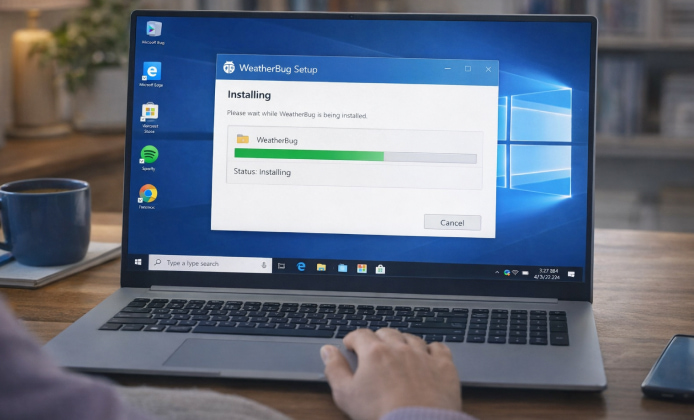
If your goal is a desktop setup, the easiest route is to install WeatherBug on Windows 10 using the recommended method for your distribution (store or direct package). After the first launch, confirm that background permissions are allowed so notifications can trigger even when the app is closed.
Windows 10: Recommended Settings
| Setting | Why it matters | Suggested choice |
|---|---|---|
| Location Access | Improves local accuracy and alert targeting | On (while using) |
| Background Notifications | Ensures timely severe-weather alerts | On |
| Units (°C/°F, km/h/mph) | Makes forecasts easier to interpret | Match your region |
Using the Installer Properly
When you run a WeatherBug installer, confirm the publisher details and decline any optional extras that aren’t required for weather tracking. A clean install helps keep the app stable and reduces conflicts with older components.
Download and Install in One Smooth Flow
For the quickest path, many users prefer to download install WeatherBug in a single session, then immediately set their primary location and alert thresholds. This approach prevents the most common mistake: forgetting to enable notifications after the first launch.
Mobile Setup and App Permissions
On phones and tablets, the simplest approach is to install WeatherBug app through the official store, then review permissions one by one. You can allow location access for hyperlocal forecasts while keeping other permissions restricted if you prefer a more private configuration.
Suggested Notification Types to Enable
- Severe weather warnings (storms, high winds, extreme temperatures)
- Daily forecast summary (morning briefing)
- Rain start/stop alerts (useful for commuting)
Common Issues and Fast Fixes
If you encounter errors during WeatherBug install, start with the basics: restart the device, update your OS, and re-check network stability. Next, verify that you’re not running an outdated build or conflicting copy left behind from a previous install.
Quick fix: If alerts don’t arrive, confirm notification permissions, background activity permissions, and battery optimization rules for the app.
Confirm the App Is Working Correctly
After WeatherBug install app is complete, run a short validation: switch between two locations, refresh current conditions, and set a test notification. If everything updates smoothly within a few seconds, your setup is in good shape.
Best Practices for Daily Use
- Pin your home and work locations for quick switching.
- Adjust alert sensitivity to avoid notification fatigue.
- Check hourly forecasts before travel, and long-range trends for planning.
Final Notes on Keeping It Updated
To maintain accuracy and stability, keep WeatherBug app install updated regularly via your platform’s standard update process. Doing so ensures you receive the latest improvements to forecasts, alerts, and performance without needing to reinstall.

 Install WeatherBug Guide: Fast Setup, Smart Alerts, and Troubleshooting Tips
 WeatherBug on PC: Hourly Conditions, Storm Alerts, and Desktop Tips
 WeatherBug on Laptop: Compare Locations, Track Radar, and Customize Notifications
 WeatherBug for Free: Stay Ahead of the Forecast Without Spending a Dime
 Top 10 Interesting Facts About WeatherBug
 Best Tips for New WeatherBug Users